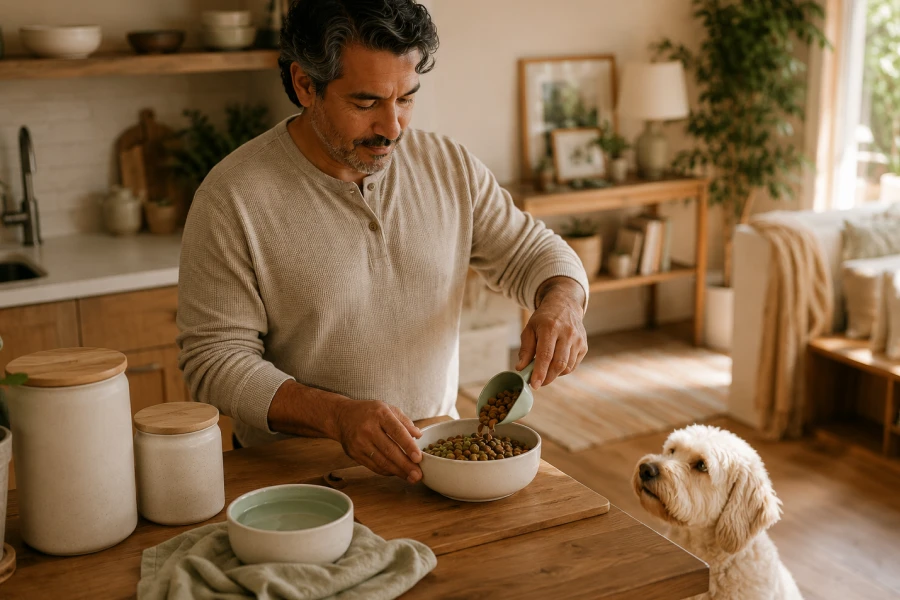
Switching dog food without stomach upset begins with preparation, not a dramatic new dinner. Dogs often thrive when changes arrive in small, predictable steps. Your feeding routine gives the process its foundation. A rushed approach can make normal adjustment signs harder to interpret. Before opening a new bag, consider your dog’s current habits. Think about appetite, meal timing, treats, and recent changes at home. Those details influence how smoothly a new food fits. A simple plan reduces the urge to react too quickly. Your dog needs consistency more than complicated rules. The goal is to make the new routine feel familiar.
Food changes can feel exciting for pet parents. A new formula may promise a better fit for your dog’s lifestyle. Still, your dog experiences the change through smell, texture, and digestion. Start by protecting the parts of mealtime that already work. The canine meal transition tips in this resource help turn that intention into a repeatable routine. Keep feeding times steady during the first several days. Measure food so every adjustment remains clear. Avoid introducing several new snacks at once. Small variables make it easier to understand your dog’s response. That clarity brings reassurance when you need it most.
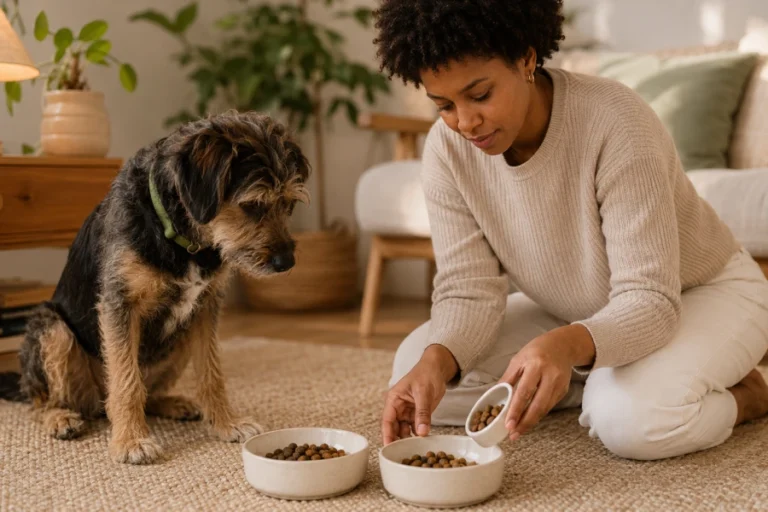
Dogs often eat best when the room feels predictable. Choose a familiar bowl and an ordinary feeding spot. Keep loud activity away from the meal whenever possible. A calm room gives your dog space to investigate new smells. Make water available before and after eating. Avoid standing over the bowl or encouraging every bite. Quiet confidence sends a better signal than pressure. If another pet shares the room, consider separate feeding spaces. That choice can prevent distraction and guarding behaviors. The setting around the food matters as much as the food itself.
Begin with a modest amount of the new food. Keep the previous food as the larger portion at first. Move forward only after your dog seems comfortable at that stage. A dog digestion support routine gives every ratio a clear purpose. Use the same scoop each time for more reliable portions. Write down the ratio instead of trusting memory. This prevents accidental increases when several people feed the dog. A slower change can feel less exciting, but it produces better observations. Your dog benefits from that extra consistency. The process should feel steady rather than urgent.
New treats can complicate a food transition. So can rich chews, leftovers, and unfamiliar supplements. Save unrelated experiments for another week. This gives the new food a fair chance to settle in. It also helps you avoid blaming the wrong item for discomfort. A feeding routine reset can be surprisingly helpful after busy holidays or travel. Return to the basics with ordinary portions and familiar timing. Most dogs appreciate that kind of simplicity. You do not need to make meals boring forever. You only need to make this stage easy to read.
Sometimes your dog has an unusual day during the transition. A long outing, a houseguest, or a delayed dinner can affect appetite. Do not assume the new food caused every change. Instead, look at the larger pattern across several meals. If your dog seems unsettled, hold the current ratio longer. There is no prize for reaching the final ratio first. A dog food change timeline works best when it stays flexible. Adjusting the pace is part of good care. Slowing down can be a wise decision. Calm consistency matters more than a calendar date.
Your dog communicates through ordinary habits all day. Notice interest in meals, energy on walks, and comfort at rest. Watch bathroom routines without becoming overly alarmed by one moment. A small log can help you see whether changes repeat. Talk with your veterinarian if you have concerns about symptoms or dietary suitability. Professional advice matters most when a dog has medical needs or persistent discomfort. At home, your role is to observe and keep routines steady. Those simple actions create useful information. They also keep you grounded during a change. Better notes lead to more confident choices.
The most successful transitions rarely feel dramatic. Meals gradually become familiar, and the new food becomes part of everyday life. Give your dog the time needed to reach that point. Keep expectations practical and avoid comparing timelines with other pets. The Pawsome Dog Food Switch resource can help you keep the process organized. Use it as a structure, not a source of pressure. Your dog’s comfort is the clearest measure of progress. A smooth change supports peaceful mealtimes long after the first week. That lasting calm is worth the patient approach.


Leave a comment