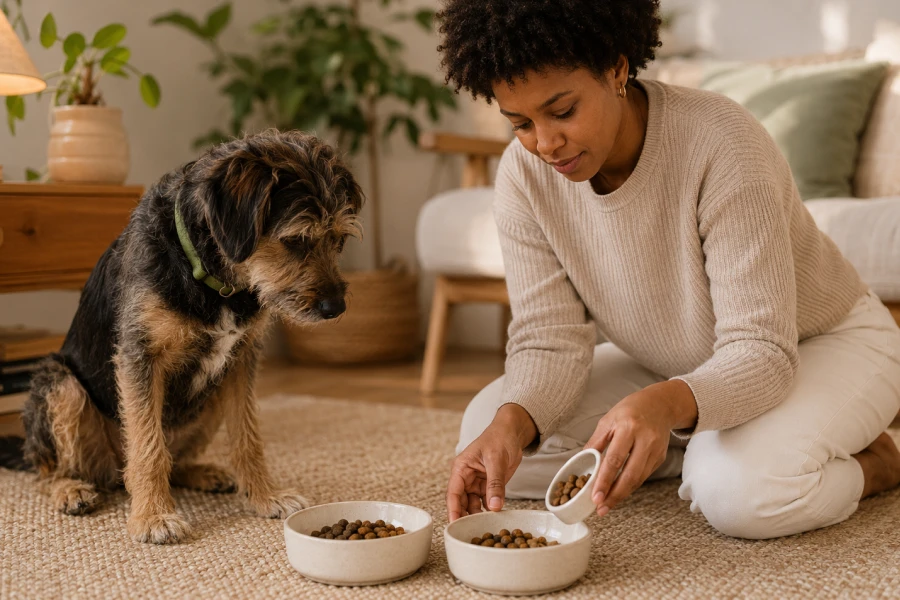
Changing food does not have to make every bowl stressful. A dog food transition schedule gives digestion and household routines time to settle. Dogs notice flavor and texture changes quickly. Their bodies often need more patience than their enthusiasm. A slower rhythm lets you spot what supports comfortable eating. It also keeps you from guessing after a difficult day. Instead of treating meals as a test, treat them as observations. Watch appetite, energy, stool quality, and ordinary behavior together. Small notes reveal patterns that memory easily misses. That calmer mindset makes the next decision easier.
Start with the meals your dog already handles well. Familiar timing creates a reliable baseline for the week ahead. That baseline makes small changes easier to understand. A dog food switch plan works best when it respects your dog’s usual appetite. Keep treats, table scraps, and new chews simple during this period. Too many changes can blur the reason behind any discomfort. Measure portions rather than relying on a fuller-looking bowl. Consistent portions also help you notice genuine appetite changes. Your dog benefits from predictability more than novelty. A quiet start makes the entire process feel manageable.
Choose a week when travel and visitors are unlikely. Busy schedules can make feeding observations harder to trust. Begin by mixing only a small amount of the new food. Let the familiar food remain the clear majority at first. This approach supports a gradual diet change for dogs without turning dinner into a surprise. Keep water fresh and easy to reach throughout the day. Notice whether your dog approaches the bowl normally. Pay attention to comfort after meals, not just excitement before them. Some dogs adjust quickly, while others need a steadier pace. Neither response means you have failed.
Increase the new food in small, measured steps. Give each ratio enough time to feel ordinary. A rushed change often creates more uncertainty than progress. Your dog’s daily routine offers useful context for each adjustment. Consider activity levels, heat, and stressful events before changing the ratio again. Keep meals at the same times whenever possible. That consistency can protect a sensitive stomach meal routine from unnecessary disruption. Make one change at a time instead of changing food and portions together. Patience creates cleaner information about what your dog needs. The goal is a smooth routine, not a fast finish.
A single skipped bite does not always signal a problem. Dogs can eat differently after a long walk or an exciting afternoon. Look for trends over several meals instead. Energy, hydration, bathroom habits, and interest in food all matter. Keep your notes brief enough that you will actually use them. A phone note or kitchen calendar is often enough. Avoid comparing your dog to someone else’s pet. Every dog brings a different history, appetite, and comfort level. Calm observation prevents small worries from becoming big assumptions. It also helps you know when to pause the process.
Life rarely stays perfectly quiet for a full week. A late workday or weekend outing can shift a feeding time. When that happens, return to the familiar rhythm at the next meal. Do not try to compensate by making a larger food change. Dogs respond well when the routine feels dependable again. Use a dog food mixing method that remains easy for every caregiver to follow. Write down the current ratio where everyone can see it. This prevents accidental jumps between stages. Clear communication keeps the experience consistent. Your dog does not need a perfect week, only a steady pattern.
Some dogs greet a new food with instant enthusiasm. Others inspect it carefully before taking a bite. Both reactions can fit within a normal adjustment period. Your job is to provide calm structure around the change. Avoid making meals emotionally charged or overly persuasive. Offer the bowl, give your dog space, and keep your tone relaxed. Consistency teaches that food is safe and predictable. It also protects your own confidence when progress feels gradual. A steady approach usually creates fewer mixed signals. The best transition often looks almost uneventful.
By the final stage, your notes should tell a clear story. Look back at what helped your dog eat comfortably. Notice which ratios felt easy and which needed more time. Use that knowledge for future food decisions. The Pawsome Dog Food Switch resource can keep those next steps organized. A thoughtful review also helps you explain the process to a veterinarian when needed. Keep the useful habits after the transition ends. Regular meal timing still matters long after the old food is gone. Calm routines create confidence for both you and your dog.



Leave a comment