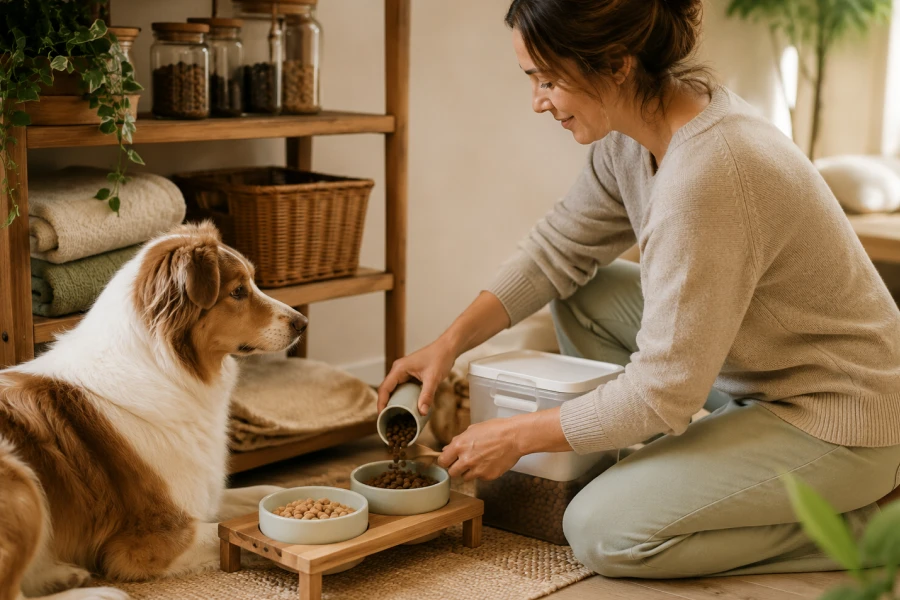
Knowing how to change dog food safely can make a routine decision feel much less intimidating. Most dogs do not need a complicated feeding system. They benefit from gradual adjustments and observant care. The first goal is to preserve what already feels normal. Familiar bowls, familiar times, and familiar portions provide reassurance. From there, you can introduce the new food thoughtfully. A simple plan helps you avoid making several changes at once. It also gives your dog time to adjust at an individual pace. Better observations lead to better next steps. Calm preparation creates a stronger start than guesswork.
Choose one new food and one realistic transition period. Avoid changing formulas repeatedly because a bag looks more appealing. Your dog needs enough time to show a clear response. Begin by identifying your usual feeding rhythm. Keep that rhythm steady while the food changes. A calm mealtime habit gives your dog a dependable daily cue. It also helps other family members follow the same plan. Write down serving amounts before you begin. Clear measurements create less confusion later. Small structure can make the entire process feel easier.
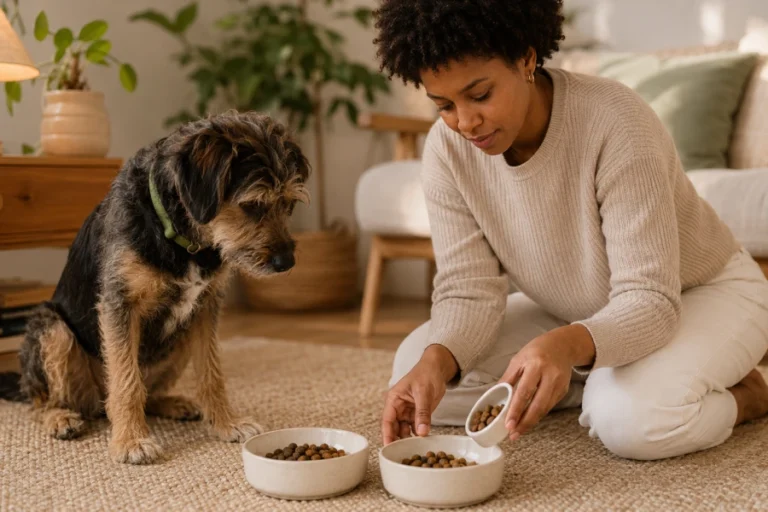
Start with mostly familiar food and a smaller amount of the new formula. Give that blend time to become ordinary. Then increase the new portion in modest steps. Keep the total serving size consistent while you adjust the mix. This separates the food change from a sudden calorie change. A gradual method can make your observations more useful. It also reduces the temptation to overcorrect after one unusual meal. Give your dog room to eat at a comfortable pace. Keep fresh water available nearby. Patience is often the most practical tool you have.
Busy weeks can still support thoughtful feeding. Prepare measured portions ahead of time when your schedule allows. Place clear instructions near the food container for other caregivers. A pet parent feeding plan is useful when several people share responsibilities. It keeps the current ratio visible and easy to follow. Try not to change the ratio during travel days or major household disruptions. Hold steady until normal timing returns. This prevents busy circumstances from looking like food-related changes. Your dog does not need perfection from you. Reliable steps are more valuable than elaborate ones.
A feeding journal does not need to become a full-time project. Record the date, food ratio, appetite, and anything notable. Use a few words that you will understand later. You might write normal, slow, eager, or left some food. Those quick notes can reveal patterns after several days. Include changes in activity, treats, or stress at home. Context matters when you are reading your dog’s response. Keep the journal somewhere easy to reach. A useful system is always better than a perfect unused one. Your future self will appreciate the clarity.
One slower meal does not always require a new plan. Dogs can eat differently after excitement, weather changes, or exercise. Look for repeated patterns before making another adjustment. If your dog seems uncomfortable, pause at the current stage. Do not rush forward just because the schedule says so. The healthy dog diet transition approach leaves room for that flexibility. Contact your veterinarian for concerns about persistent symptoms or your dog’s specific health needs. Professional input can help you make safer dietary choices. At home, steadiness remains your most useful habit. A calm pause can prevent unnecessary changes.
Dogs often relax when daily cues stay the same. Use a familiar phrase before setting down the bowl. Keep the feeding location clean and uncluttered. Let your dog eat without added pressure. That simple routine can support confidence around the new food. Avoid turning every meal into a performance review. Instead, notice progress quietly over time. A settled dog often shows you more through ordinary behavior than dramatic signals. Keep the transition in proportion to the rest of life. The best feeding routine fits naturally into your household.
Once the new food becomes familiar, keep the lessons from the process. You now know which routines help your dog feel comfortable. Store that information for future food decisions. The Pawsome Dog Food Switch resource can help you repeat those steps when needed. Continue measuring portions and watching everyday habits. Small consistency supports a calmer feeding relationship. Your dog does not need constant novelty to thrive. A predictable bowl can become a welcome part of the day. That confidence starts with one thoughtful change.


Leave a comment