
Building trust with a timid cat asks you to notice what feels safe from their perspective. A cat who hides is not being difficult. They may simply need more time and control. Your first job is to make the home easier to understand. Predictable routines, clear pathways, and quiet retreats can help. The next step is to become a calm presence within that environment. You do not need to create constant interaction. Small respectful moments often matter more. Let your cat decide when to observe, approach, or rest nearby. A patient relationship begins with that freedom.
Choice can reduce pressure for a nervous cat. Offer more than one resting place when possible. Make sure there is a simple path between food, water, litter, and shelter. Avoid blocking a cat in a corner during routine care. The shy cat confidence plan can help you think through the environment from your cat’s point of view. Let your cat decide where to sit and how close to come. Do not follow them from room to room. Distance can be an important form of control. Control makes safety easier to feel.
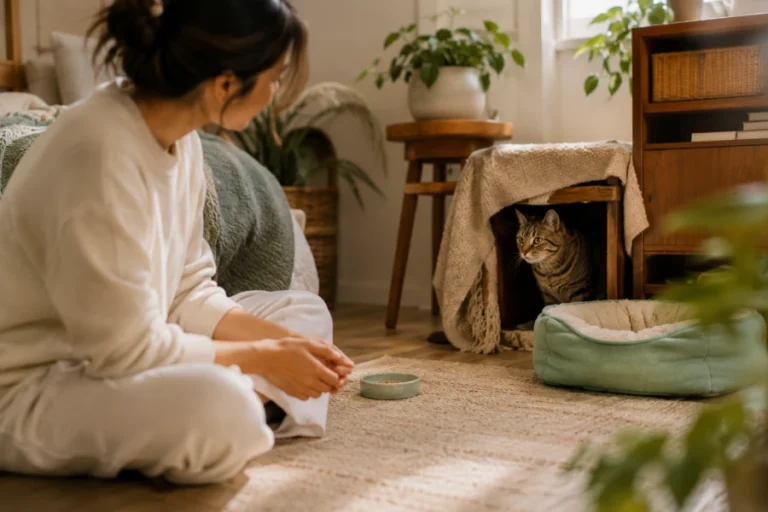
Spend quiet time in the same room without seeking contact. Read, work, or listen to something softly. Let your cat hear and observe your ordinary movements. Keep your body turned slightly away at first. This can feel less direct than facing the cat. A cat trust building routine becomes more effective when it fits real life. Brief daily calm is more useful than one long effort. Your cat may begin watching from a more open spot. That quiet attention can be the beginning of familiarity. Familiarity makes future interaction less surprising.
Care routines can communicate reliability. Feed meals at similar times whenever possible. Refresh water and maintain litter areas without sudden noise. Speak softly when you enter the room. Move with predictable, unhurried motions. The fearful cat comfort cues resource can help you stay attentive to your cat’s responses. Notice what changes make them retreat and what helps them remain visible. Keep the routine simple enough to repeat every day. Consistency becomes a message your cat can understand. That message says the home is dependable.
Gentle play can offer a low-pressure way to share space. Use a wand toy or rolling toy that stays away from your hands. Begin slowly and let your cat watch. Pause between movements so they can decide whether to join. Keep the session brief if your cat seems uncertain. A timid cat may need several opportunities before playing. Do not move the toy toward a hiding place. Instead, let it travel away from the cat. Curiosity works best when it feels self-directed. Play can become a useful bridge over time.
A cat may step back, turn away, or leave the room during an interaction. Treat those choices as useful communication. Do not follow with more attention. The low-pressure cat interaction approach teaches that retreat is safe. That lesson can make your cat more willing to approach later. Avoid reaching for a cat just because they are nearby. Let them initiate contact whenever possible. Respecting boundaries is not passive. It is active relationship-building. Your cat learns that their comfort matters.
Progress may appear before your cat becomes openly affectionate. They might eat sooner after you enter the room. They may rest in a more visible place. Some timid cats begin exploring while people are nearby. Notice those changes without asking for immediate closeness. A short note can help you see improvement over time. Remember that confidence can move unevenly from day to day. A busy event may cause temporary retreat. That does not erase previous progress. Stable care helps your cat recover their rhythm. Patient observation keeps the process realistic.
A strong bond grows through countless ordinary moments. Your cat learns that your presence brings routine, respect, and calm. The How to Get a Shy Cat to Trust You resource offers a thoughtful structure for that journey. Use it alongside your cat’s individual signals and preferences. Continue creating gentle invitations without pushing for a particular outcome. Your cat may eventually offer closeness in their own unique way. Let that closeness arrive as a choice. A quiet relationship can become one of the deepest kinds. Trust is worth building patiently.



Leave a comment