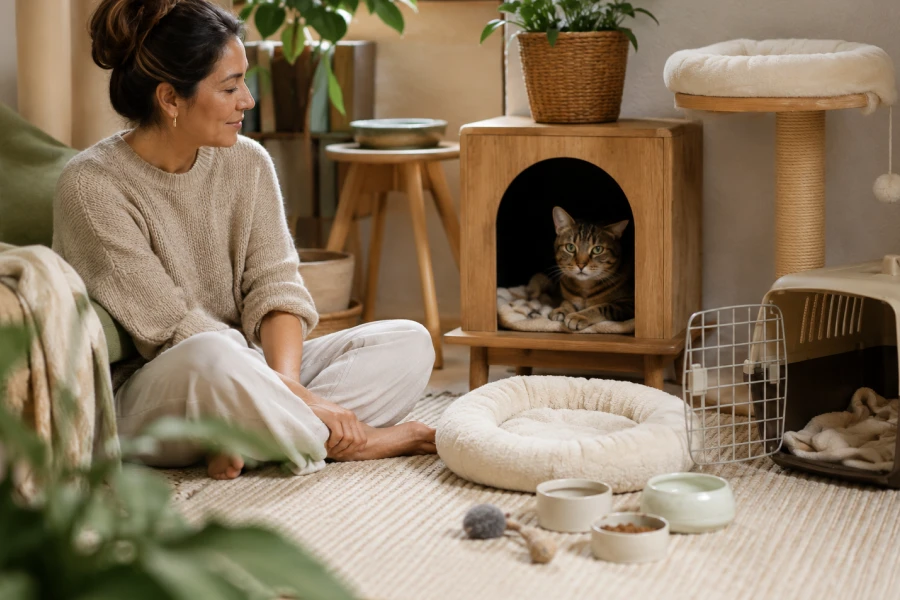
Knowing how to make a scared cat feel safe begins with reducing pressure in the environment. Fear can make even a familiar room feel difficult to navigate. Your cat may hide, freeze, or observe from a distance. Those responses deserve patience and practical support. Start by making resources easy to access. Offer food, water, litter, and rest areas without forcing your cat through busy spaces. Keep your movements calm and predictable nearby. A quieter routine helps your cat learn what to expect. Safety grows when the home feels readable. From there, confidence can begin to return.
Every nervous cat needs a place where no one asks anything from them. A covered bed, quiet room, or open carrier can become that retreat. Keep it accessible at all times. Do not pull your cat out to speed up socialization. The scared cat recovery steps resource can help you create a calmer first setup. Place essential resources within a comfortable distance. Make sure your cat can leave the area without crossing a busy path. A retreat is not a setback. It is a base from which confidence can grow. Safety gives your cat a choice.
Sudden sounds and fast movement can feel overwhelming for a fearful cat. Keep household activity lower around the cat’s preferred space. Close doors gently and avoid loud voices nearby. Introduce visitors slowly when possible. Let your cat remain out of sight during busy gatherings. A quiet home cat routine can make daily care feel less unpredictable. Try to follow similar patterns for feeding and cleaning. Repetition helps your cat understand what comes next. Familiarity can reduce the emotional load of the day. That steady rhythm supports recovery.
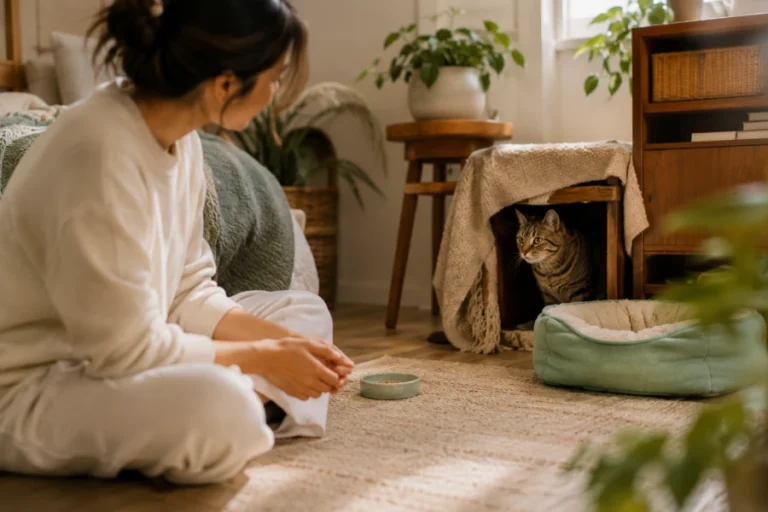
Choice is a powerful part of confidence. Let your cat decide whether to approach, hide, play, or rest. Keep doorways and escape routes open during early interactions. Sit nearby rather than moving toward the cat. Offer a treat, then give space for a decision. The cat confidence building tools framework can help you avoid accidental pressure. Do not corner your cat with your body or furniture. Respecting retreat makes future approaches more likely. Your cat learns that being near you remains voluntary. That lesson can be deeply reassuring.
Play can help some cats reconnect with their natural curiosity. Start with a wand toy or an object that creates distance. Move it gently across the floor rather than above your cat’s head. Let the toy pause often. A scared cat may watch several sessions before joining in. That observation is still part of the process. Keep sessions short and quiet. Stop while your cat remains interested. Do not chase a hiding cat with the toy. Play should always feel like an invitation.
Ask visitors to ignore your cat at first. Direct attention can feel intense for an already nervous animal. Let your cat watch from a safe position. Encourage people to sit quietly and move slowly. Avoid reaching toward the cat or trying to earn trust quickly. The trust-based cat care approach keeps your cat’s comfort at the center. Over time, a confident cat may choose to investigate. That choice is more meaningful than forced contact. Calm guests can become part of a safe routine. Patience protects the progress you have already made.
Progress may appear in very small ways. Your cat might eat while you remain in the room. They may begin sitting near the doorway instead of behind furniture. Some cats start grooming or stretching in shared spaces. These actions can suggest growing comfort. Notice them without moving too quickly toward the cat. Let the moment stay ordinary. A calm response keeps the experience safe. Small wins often build on one another. Confidence develops through repeated peaceful days.
A fearful cat does not need an instant transformation. They need a routine that keeps proving the home is safe. The How to Get a Shy Cat to Trust You resource can help you maintain that steady approach. Continue offering space, choice, and calm companionship. Seek veterinary guidance if fear appears sudden, severe, or linked to physical concerns. Your everyday role is to make the home easier to predict. Trust may grow slowly, but it can grow deeply. Each respectful interaction adds another layer of safety. That foundation can change the whole relationship.



Leave a comment