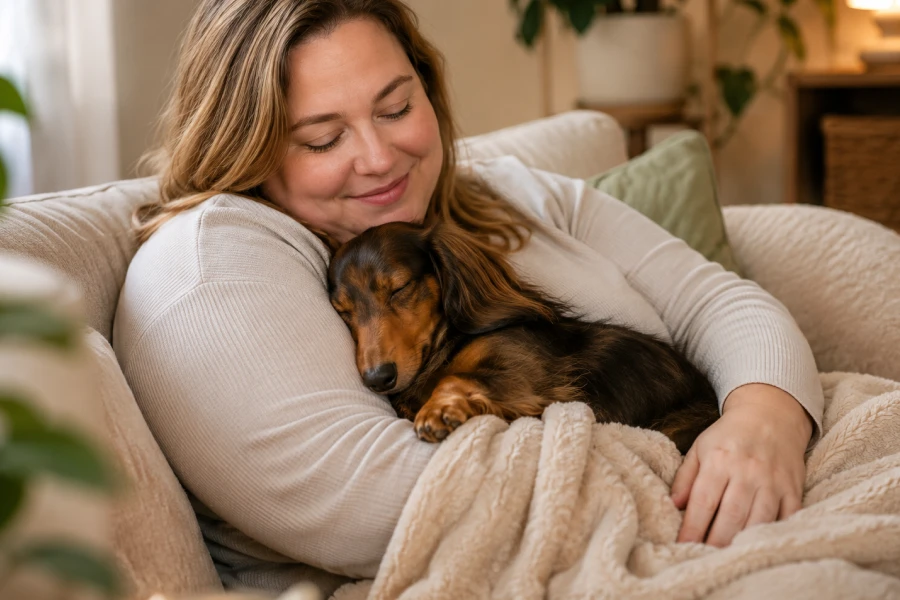
How dogs show love to humans is often less theatrical than people expect. A dog may choose closeness without climbing into your lap. They may bring a toy, wait nearby, or settle beside your feet. Those habits can become meaningful when they repeat over time. The strongest clues usually appear when a dog feels relaxed. Your role is to notice without demanding a performance. Every dog has different comfort levels with touch, play, and attention. Personality shapes the way affection appears. Familiar routines make those personal signals easier to recognize. Once you slow down, the bond can feel visible in everyday life.
Dogs often use routines to express connection. They may wait for you near the kitchen before dinner. They may follow a familiar path toward the door at walk time. These habits show that your presence is part of their daily world. The trusting dog relationship perspective helps you notice these repeated moments. Watch what happens when your schedule changes slightly. Does your dog look for you or settle more easily after you return? Patterns matter more than isolated gestures. Routine can be a quiet form of attachment. That consistency is worth appreciating.
A dog who chooses to sit near you may be expressing comfort. The distance can vary depending on personality and temperature. Some dogs enjoy leaning against a leg. Others prefer the same room without direct contact. Both styles can belong to a secure relationship. A everyday dog attachment clues approach keeps your attention on choice. Notice whether your dog returns after freely moving away. This voluntary pattern can be more informative than a command response. Give your dog room to decide. Connection is strongest when it remains freely offered.
Play invitations can be warm gestures of social connection. A toy dropped near you may be an opening for shared attention. A playful bounce can invite you into your dog’s world. Still, play styles vary widely between individual dogs. Some enjoy tug, while others prefer chasing or scent games. Observe what leaves your dog satisfied rather than overwhelmed. Keep sessions short enough to end on a positive note. A good play ritual builds confidence for both of you. It also gives your dog an enjoyable way to communicate. Shared fun can become part of a lasting relationship.
Dogs respond to the emotional tone of a room. A quiet day may bring more resting and closeness. A busy gathering may bring distance, even from a loving dog. The situation around a behavior changes what it may mean. The reading dog emotions resource can help you slow down before labeling a reaction. Notice whether your dog seems loose, interested, and able to disengage. Those qualities often matter more than one specific gesture. Avoid treating affection as constant availability. Dogs need downtime just as people do. Respect keeps the relationship balanced.
Resting near you can be one of the clearest signs of comfort. Your dog may choose the same room during work or television time. They may listen for your movements while pretending to nap. These habits often reflect an easy sense of safety. Notice the relaxed details of the moment. A deep sigh, soft body, or peaceful stretch can tell you plenty. Do not interrupt every quiet interaction. Sometimes the shared calm is the connection itself. Let your dog enjoy the room without expectations. Ordinary peace can become a meaningful shared ritual.
Affection grows more easily when a dog feels secure. Predictable meals, walks, and rest times can support that security. Clear cues also help dogs understand what will happen next. Use gentle handling and avoid forcing unwanted contact. Give your dog choices within daily life whenever possible. These small choices show respect for their needs. A reliable home can make affectionate behavior easier to offer. Trust develops through repetition, not one special moment. Your dog learns that you notice their signals. That understanding strengthens every part of the relationship.
Your dog’s affectionate habits may change with age and circumstances. Stay curious about the signals that appear now. A new resting place or slower greeting can still hold meaning. The Understanding Canine Love Signals resource gives you a thoughtful starting point. Use it to deepen observation, not to judge your dog against a standard. Your dog’s version of love may be playful, watchful, or wonderfully quiet. Notice the gestures they choose again and again. Respond with steady care and respect. That is how a shared language becomes stronger.

Leave a comment